


Collector Watches and the Case for Restraint
A collector watch is rarely identified by its price, its complication count, or the volume of attention it receives across a room. The collector watches that endure tend to make their case more quietly: a measured dial, a considered case profile, an automatic movement that rewards ownership, and a presence that becomes more familiar with wear.
For the person building a wardrobe with the same discernment as a home or a record library, a watch should not be an interruption. It should be a constant. That distinction separates a considered collection from accumulation, and personal style from temporary appetite.
What Makes Collector Watches Worth Keeping
The most satisfying watches possess a point of view that does not need explanation. Proportion is usually the first signal. A case should sit naturally on the wrist, with dimensions that serve the design rather than announce themselves. The dial should remain legible without becoming clinical. Details such as applied indices, a balanced date aperture, or a restrained brushed finish reveal their quality gradually.
Materials matter for the same reason. Stainless steel has earned its place through durability and versatility, but the finish is what gives it character. A polished bevel beside a satin-brushed surface creates depth without ornament. Vegetable-tanned leather develops a patina that belongs to its owner. Thoughtful metalwork and natural leather are not decorative extras. They allow a piece to improve through regular use.
Automatic movements add another dimension. Their appeal is not merely mechanical nostalgia. A self-winding movement turns daily wear into a relationship with the object. The motion of the wrist powers the watch; the visible or felt operation of its mechanism asks the owner to slow down long enough to notice what is working beneath the dial. For many collectors, this quiet interaction is more meaningful than novelty features that age quickly.
A watch need not be rare to be collectible. Limited releases can provide a useful sense of context, especially when they reflect a coherent design language, but scarcity alone is not provenance. A watch becomes worth keeping when it holds its design integrity after the initial excitement has passed. The question is simple: would you still choose it on an ordinary Tuesday, with a navy knit, a tailored jacket, or a crisp white shirt?
The Modern Alternative to Heritage Theater
Heritage has real value. Long histories, specialized workshops, and recognizable design codes can offer useful reference points for any serious collector. Yet heritage can also become theater when a watch relies too heavily on borrowed nostalgia, oversized branding, or artificial waiting rituals to create importance.
A modern collector often wants something more personal. They want the assurance of sound construction and mechanical integrity, without wearing someone else’s idea of status. They may appreciate a familiar watchmaking tradition while preferring a design that belongs to the present: cleaner typography, more adaptable proportions, and materials selected for daily life rather than display-case mythology.
This is where quiet luxury has particular force. It is not the absence of distinction. It is distinction expressed through editing. The strongest intentional timepieces are designed with enough restraint to work across settings - a client meeting, a gallery opening, a long weekend away - without requiring a costume change or a lengthy explanation.
That approach also respects the owner’s intelligence. Rather than pursuing a loud signature at every angle, it leaves room for the wearer’s own standards. The appeal is cumulative. Someone notices the case finishing, the clarity of the dial, or the way a leather strap has softened over time. Recognition arrives through proximity, not spectacle.
Style Is Part of the Specification
Technical merit and personal style are not opposing ideas. A well-made automatic watch deserves a place in a collector’s rotation precisely because it can be worn, not because it must be preserved from life.
Consider scale before category. A slimmer, more compact profile may be the better answer for a collector who works in tailored clothing or prefers a watch that disappears under a cuff. A more substantial steel case can suit someone whose wardrobe leans toward textured outerwear, denim, and relaxed tailoring. Neither is inherently superior. The relevant measure is whether the design feels proportionate to the person wearing it.
Color deserves the same care. A black, silver, deep blue, or warm neutral dial will usually offer more range than a color selected for one season’s visual mood. This does not require a collection of identical watches. It means choosing variation with purpose: perhaps one steel automatic for daily structure, one leather-strapped piece for quieter evenings, and one distinctive design that marks a personal milestone.
Building a Collection With Intention
The temptation to acquire widely is understandable. Watch culture produces a constant stream of anniversaries, new materials, limited colors, and commentary that can make every release feel urgent. A better collection begins with a narrower question: what role is missing from the watches you already wear?
A useful collection is organized around real occasions and genuine preferences, not categories imposed by other people. You might begin with an automatic watch that can carry most of the week. Add a second piece only when it offers a different experience - a smaller case, a more formal strap, a contrasting dial, or a meaningful mechanical detail. This approach creates a rotation with rhythm instead of redundancy.
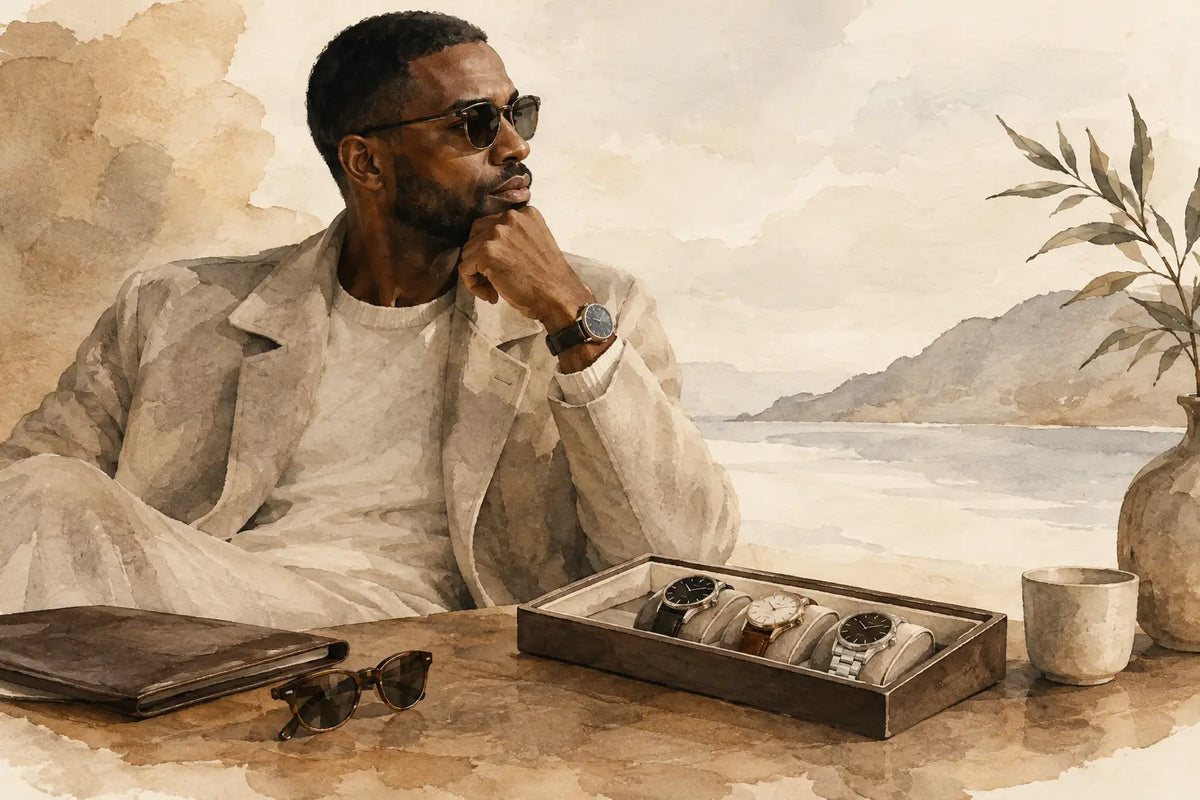
Collector storage is part of that discipline. An Elite Collectors Case does more than keep watches together. It gives the collection a physical boundary. When each watch has a considered place, it is easier to see what you own, what you wear, and what no longer reflects your direction. Protection matters, of course, but organization also encourages better decisions.
There is no universal number of watches that constitutes a collection. Three worn often can be more compelling than twenty kept out of habit. The right size depends on your lifestyle, your appetite for variety, and the degree to which each piece retains a clear role. Collecting is less about completion than refinement.
Questions to Ask Before Adding Another Watch
Before committing to a new piece, assess it beyond the product image. First, consider whether its size and thickness will work with your existing wardrobe. Then examine the dial at a practical distance, not only in close-up photography. A compelling macro detail can become visual noise on the wrist.
Ask what the movement contributes to your experience. An automatic caliber is not automatically the correct choice for every occasion, but it offers a tactile connection that many collectors value. Consider serviceability, water resistance appropriate to your routine, and the quality of the strap or bracelet. These practical measures determine whether a watch remains in rotation after the first few weeks.
Finally, separate limited availability from lasting relevance. A limited release should feel like a focused expression of a design, not a reason to suspend judgment. The strongest acquisition is the one that makes the rest of your collection feel more coherent.
A Watch as a Modern Heirloom
The word heirloom can sound overly ceremonial, as though an object must wait decades before earning emotional weight. In practice, an heirloom begins when something is used with care and linked to a life well lived. The watch worn while founding a company, finishing a demanding project, moving into a first considered home, or taking a long-awaited trip acquires meaning because it was present.
That is why durability is inseparable from sentiment. A carefully finished case, dependable automatic movement, and well-chosen leather strap are not only signs of craftsmanship. They give an object the capacity to accompany its owner through years of ordinary and consequential days.
NCMPRBL approaches its watch collections with this modern understanding of permanence. Pieces such as Ascend Automatic and Advance are not designed as fast visual statements. They are made to become familiar parts of a personal uniform: precise enough for the collector, composed enough for daily wear, and distinct without leaning on a logo to do the work.
The most rewarding watch collection is not a display of what was acquired. It is a record of what was chosen carefully. Start with the piece you will reach for without thinking, wear it long enough to understand its character, and let the next decision emerge from the life you are actually living.